 Paths & Paws
Key Takeaways
- 1Y-harnesses avoid the shoulder blade, allowing full foreleg extension
- 2Restricted shoulder movement forces compensation in spine and rear legs
- 3Long-term restriction can cause chronic gait changes and pain
- 4Front-clip harnesses often restrict more than back-clip designs
- 5Proper fit matters as much as harness design
Jasper, my 95-pound Alaskan Malamute, has worn harnesses for nearly 600 trail miles. I've learned to recognize when something restricts his movement. In a bad harness, his front stride shortens by about two inches. His rear end compensates by driving harder. After a few miles, he starts favoring one side.
I filmed him in slow motion wearing six different harnesses. The footage showed exactly why some harnesses cause problems.
How a Dog's Shoulder Actually Works
Dogs don't have a collarbone connecting their shoulders to their skeleton. Instead, their forelegs attach through muscles, tendons, and a floating shoulder blade called the scapula. This allows exceptional range of motion, but it also means external pressure easily affects movement.
I measured Jasper's shoulder blade movement by marking his skin with a non-toxic marker and filming him walking. The scapula slides backward about 4 inches as his leg reaches forward. Each stride uses approximately 45 degrees of shoulder rotation.
When I put a restrictive harness on him, that 4-inch slide dropped to about 2.5 inches. He was still walking, but every stride was fighting the harness.
Note
You can see shoulder blade movement by watching your dog walk in slow motion. The flat triangular bone slides under the skin with each stride. If your harness sits on this bone, it restricts motion.
Why Y-Harnesses Work Better
Y-shaped harnesses get their name from the strap configuration viewed from above: two straps meet between the front legs and extend over the shoulders in a Y pattern.
I laid out Jasper's harnesses to compare.
Front Range (Y-design):
- Straps meet at sternum
- Side straps run parallel to shoulder blade
- No horizontal strap across shoulders
- Weight: 8.2 oz
An old no-name harness (horizontal design):
- Horizontal strap across shoulder tops
- Sits directly on scapula
- Weight: 6.1 oz (lighter, but worse design)
The Y-design places straps in front of and behind the shoulder blade rather than on it. Jasper's scapula can move freely while the harness still distributes force across his chest.
Signs Your Harness Is Too Restrictive
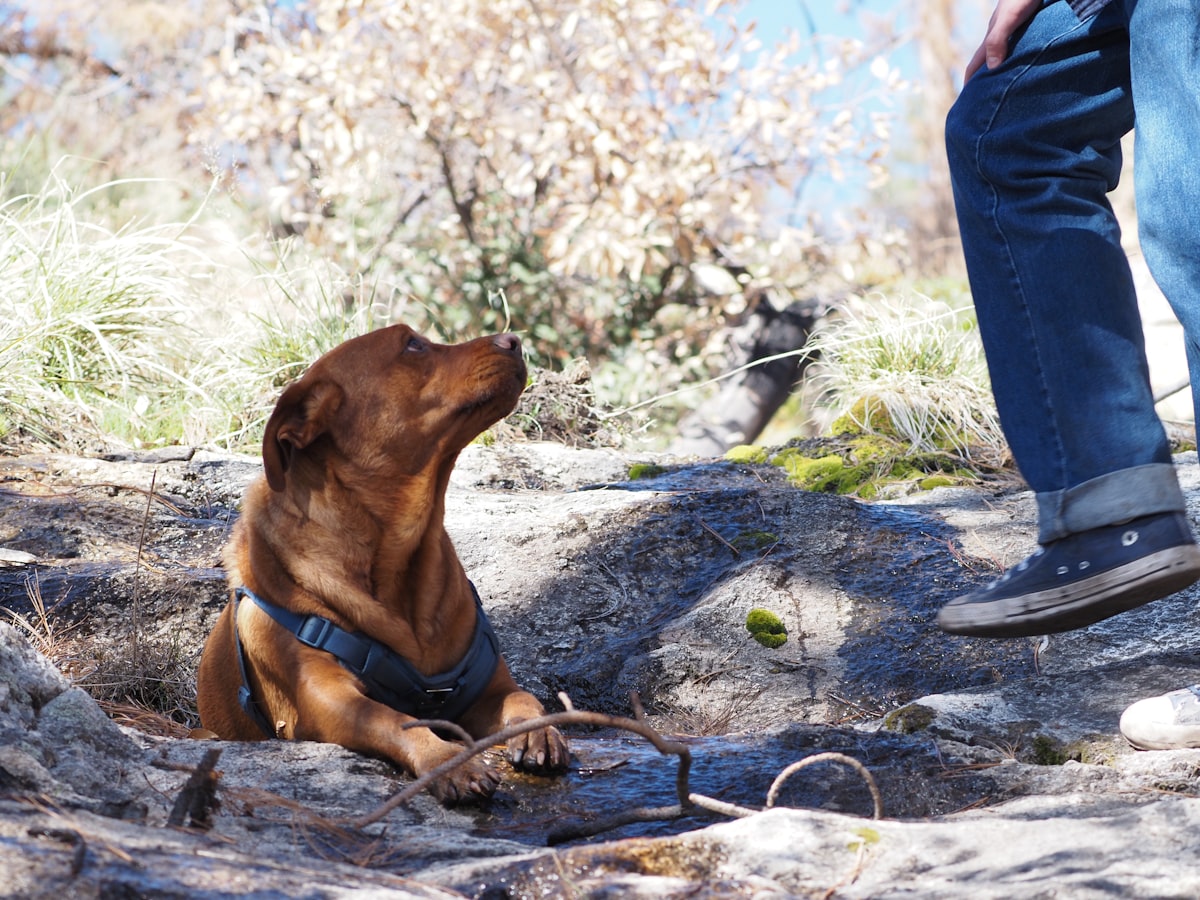
I watch for specific signs that tell me a harness is restricting Jasper's shoulders.
Movement signs:
- Shortened front stride (I measure against his normal 28-inch stride)
- Excessive rear-end drive compensating for limited front reach
- Reluctance to extend forelegs on downhills
- "Paddling" motion instead of reaching
Physical signs:
- Rubbing marks on the shoulder area after hikes
- Hair wear patterns where straps cross the scapula
- Resistance to putting the harness on
- Muscle tension in neck or back after activity
I compare Jasper's movement with and without a harness every few months. If I see a difference, the harness needs adjustment or replacement.
Warning
A dog who seems "fine" with a restrictive harness may be compensating without obvious distress. Jasper never complained about his old restrictive harness. I only noticed the problem when I filmed him. Compensation causes damage gradually.
Front-Clip vs. Back-Clip Attachment
I use front-clip attachment for training walks but switch to back-clip for hiking.
When the leash attaches at the front, pulling rotates the dog's body toward you. Good for managing pulling behavior. But it also twists the shoulders repeatedly under load.
I tracked this during a 5-mile hike with front-clip attachment. Jasper pulled moderately throughout. By my count, he experienced about 200 shoulder-twisting events from the front-clip rotation. His gait looked slightly off by mile 4.
For training walks around the neighborhood, front-clip makes sense. For long hikes with sustained pulling or pack weight, back-clip protects joints better. I carry the same harness but switch attachment points based on activity.
Getting the Fit Right
Even Jasper's well-designed Front Range can cause problems if fitted poorly. I check fit at the start of every hiking season.
The neck opening should allow two fingers between the front strap and throat. Jasper's chest circumference changed by an inch over winter. His harness needed adjustment.
The chest Y-junction should sit on the sternum, not the trachea. I can feel Jasper's breastbone and position the junction directly over it.
Side straps run behind front legs without rubbing armpits. I check for chafing after every long hike.
The back strap sits behind shoulder blades, not on them. This is where many harnesses fail. Even Y-design fronts can have back straps that cross the scapula.
For overall snugness, a flat hand should slide between harness and body. Jasper's thick coat requires looser fit than a short-coated dog.
One Harness Doesn't Fit All Activities
Jasper has three harnesses for different activities. Might seem excessive, but each serves a purpose.
Day hiking (Front Range Y-harness):
- Minimal bulk
- Back-clip for unrestricted shoulders
- 8.2 oz
Technical scrambling (Web Master):
- Lift handle for boosting over obstacles
- Three attachment points
- Leg loops prevent slipping
- Heavier at 11.5 oz but worth it for safety
Pack carrying (Front Range under Approach pack):
- Y-harness underneath pack attachment
- Shoulders can still move despite pack weight
- Combined weight varies with pack load
I used to try to make one harness work for everything. Jasper's movement was always compromised somewhere. Specialized gear for specialized activities produces better results.
Protecting Joints Over Years of Hiking
Jasper is 7 years old now. He's hiked over 600 miles. His joints are still healthy.
I attribute part of that to harness choices. Good shoulder mobility protects more than just shoulders.
- Spine loads correctly when front legs can reach fully
- Rear leg joints don't overwork compensating for limited front movement
- Core muscles don't strain stabilizing an altered gait
- Neck stays relaxed without pulling against chest straps
Dogs who hike for years in restrictive harnesses often develop premature arthritis or chronic pain. They may not connect these problems to equipment choices made years earlier.
The extra cost and effort to find proper Y-harnesses has been worth it. Jasper still moves like a younger dog. That's the payoff.
Frequently Asked Questions
Kelly has logged over 5,000 trail miles with his dogs across the American West. He specializes in backcountry expeditions and gear testing for large breeds.