 Paths & Paws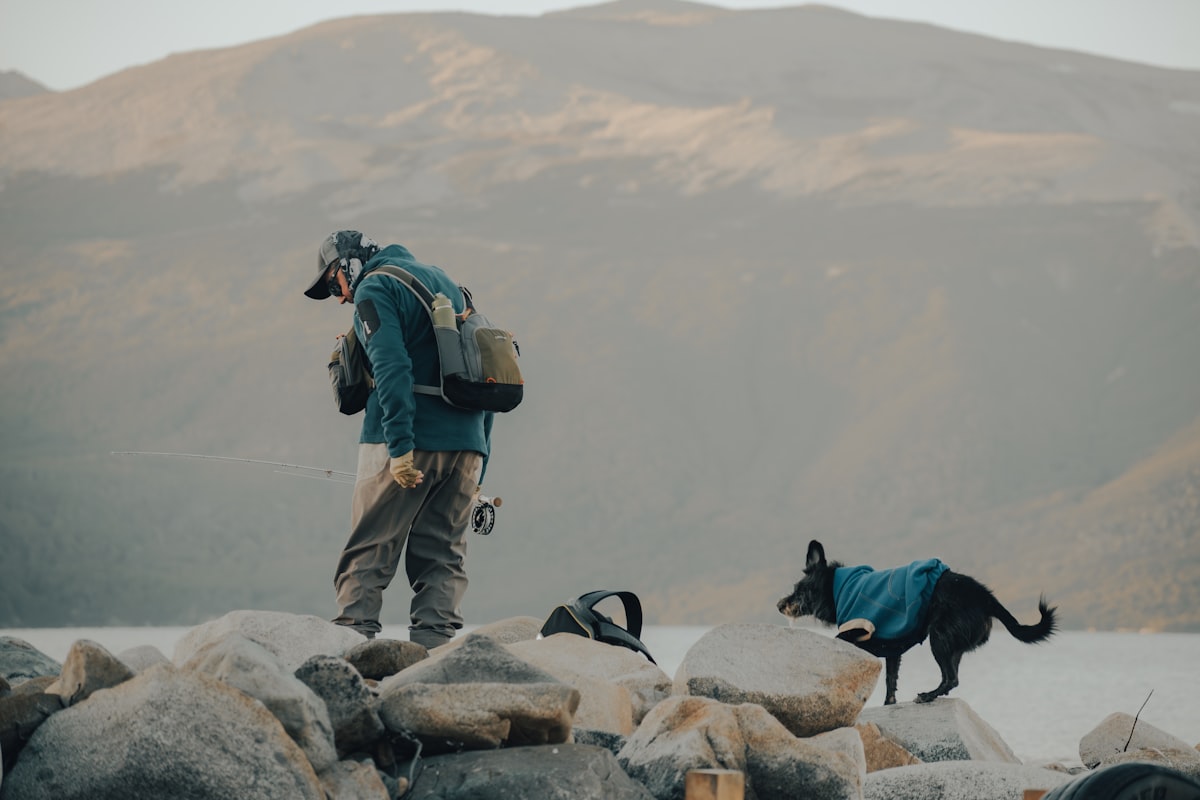
Key Takeaways
- 1Shale and scree create sharp edges that slice soft paw pads
- 2Dogs don't always show pain until damage is serious
- 3Boots are the most reliable protection for extended rocky terrain
- 4Paw waxes help with moderate conditions but won't stop deep cuts
- 5Conditioning improves pad toughness but has limits
Shale fields and scree slopes look intimidating to humans. We pick our way carefully, watching each footstep. Dogs bound through with apparent confidence, unaware that the sharp edges are slicing their pads with every step. Cedar taught me this on a hike in the Emigrant Wilderness. She trotted across a shale field while I picked my way carefully. I didn't notice anything wrong until I saw blood spots on a light-colored rock. Her pads had three cuts I hadn't noticed developing. By the time you notice blood on the rocks, damage is done.
Understanding the Threat
Shale and scree present specific challenges different from general rough terrain. Freshly broken edges are razor-sharp, capable of slicing through paw pads in a single step. Angular fragments create multiple cutting points with every foot placement. Loose material shifts underfoot, causing slips that abrade pads even when edges aren't directly contacted. Small fragments work their way between toes and under nails, creating constant irritation. Repeated small cuts accumulate quickly, with each step adding to the damage.
Shale forms in flat, plate-like fragments with very sharp broken edges. The rock is often darker in color, making cuts harder to spot until blood appears. Certain geological regions are dominated by shale, making it unavoidable on many trails.
Scree presents different challenges. The mixed-size loose rock varies from gravel to boulder size. The surface is often unstable underfoot, shifting as your dog moves across it. Some pieces are sharp, others rounded, but the unpredictability makes every step a risk.
Dogs face particular vulnerability on these surfaces. Their paw pads are quite tough, but they're not armor. Dogs apply more force per foot than humans wearing protective boots. They can't see or anticipate sharp edges the way we can look down and choose our steps. Their natural inclination is to move quickly, generating more impact force with each step. Most concerning, they may not show pain until they're well past their threshold for damage.
Dogs Hide Pain
Dogs often hide pain and discomfort. Just because your dog isn't limping doesn't mean their pads aren't being damaged. Check frequently in rocky terrain.
Assessing Terrain Risk
Not all rocky terrain requires the same protection approach. Cedar and I have hiked through miles of rounded river rocks with no issues, yet I watched her pads suffer real damage in just fifty feet of fresh shale. Learning to read terrain before you commit saves both suffering and emergency evacuations.
| Terrain Type | Risk Level | Protection Needed |
|---|---|---|
| Rounded river rocks | Low | None typically |
| Worn granite | Low | None typically |
| Stable rocky surfaces | Low | None typically |
| Mixed terrain with sharp elements | Moderate | Wax or monitor closely |
| Weathered shale | Moderate | Wax or boots |
| Loose gravel with sharp pieces | Moderate | Wax, check frequently |
| Fresh shale fields | High | Boots required |
| Large scree slopes | High | Boots required |
| Technical terrain with sharp holds | High | Boots required |
Before entering risky terrain, examine the rock. Pick up a piece and look at the edges. If they're obviously sharp when you look closely, your dog's pads will find every one.
Protection Options
Several approaches can protect paw pads, with varying effectiveness.
Dog boots provide the highest level of protection. They offer complete coverage of the pad surface, protecting between toes and over nails where debris lodges. Quality boots can handle extended rough terrain and are reusable across multiple hikes, making them cost-effective for frequent hikers. The downsides are real though. Dogs need conditioning to accept boots, and some never fully adjust. Boots can slip on wet rock, creating a different kind of hazard. Heat builds up in warm weather. Proper fit is critical for boots to work well. These are best for extended travel through high-risk terrain, dogs with sensitive pads, and situations where you know you'll face repeat exposure to sharp surfaces.
Paw waxes provide moderate protection with easier application. They go on quickly with no conditioning needed. Waxes offer light protection against minor abrasion and provide moisturizing benefits for overall pad health. However, they won't stop deep cuts. The coating wears off quickly in rough terrain and needs frequent reapplication. Against truly sharp surfaces like fresh shale, waxes simply aren't effective. Use them for moderate terrain, as supplemental protection alongside boots, or as part of ongoing pad conditioning.
Natural pad conditioning develops over time through regular exposure to rough but not sharp terrain. Tough pads develop gradually but take months to build. Even well-conditioned pads have limits. No amount of toughening creates resistance to razor edges. Conditioning can be lost during off-seasons when a dog spends months on soft surfaces. Conditioning is not a substitute for protection when you know terrain will be severe.
Pro Tip
The best approach often combines methods. Build conditioned pads for baseline toughness, use wax for moderate terrain, and bring boots for high-risk sections.
Fitting and Using Boots
If you choose boots, proper fit and conditioning matter.
Measure paw width, not length, since paws spread under weight. Front and back paws may need different sizes. The fit should be snug enough that boots don't rotate, but not so tight that circulation is restricted.
Conditioning takes time. Start with boots on at home using heavy treats. Keep wearing periods short initially, then gradually extend them. Move to backyard or easy walks, then progress to longer hikes on easy terrain. Deploy boots in challenging terrain only once your dog is comfortable.
On the trail, check fit before entering rough sections. Stop to readjust if boots rotate and watch for debris inside boots. Remove them for water crossings since wet boots slip. Always carry spares because boots get lost.
Checking Pads During Hikes
Don't wait for limping to check your dog's paws.
Check paws before entering rocky terrain, midway through extended rocky sections, after exiting back to softer ground, and any time your dog slows or hesitates.
Look for visible cuts or abrasions, bleeding both obvious and hidden, debris lodged between toes, swelling or tenderness, and worn or thinning pad surface.
To check properly, have your dog lie down or sit. Lift each paw individually and spread the toes gently to see between them. Check the main pad and smaller toe pads. Look at nails and nail beds too.
Clean, dry pads are good. Pink, abraded areas suggest damage building. Active bleeding means stop and treat.
Field Treatment
When you find pad damage on the trail, your response depends on severity.
Minor abrasions need basic care. Clean with water if available and apply pad balm if you're carrying it. A self-adhesive bandage protects against further damage while you monitor for worsening.
Active bleeding requires more attention. Apply direct pressure with a clean cloth until bleeding stops. Clean the wound once you can see what you're dealing with. Apply antibiotic ointment if you have it. Bandage securely with vet wrap over gauze, but check that the bandage doesn't restrict circulation. A bandage that's too tight creates new problems.
Deep cuts change your plans. Stop hiking on that terrain immediately. Clean the wound thoroughly and apply firm pressure to stop bleeding. Bandage well enough to protect for the hike out. Consider whether the injury warrants evacuation for veterinary care. Deep pad cuts may need sutures.
When you're unprepared, improvised protection gets you home. Socks with duct tape wrapped around them work short-term. Vet wrap alone provides some barrier. We've used a cut-up t-shirt in a pinch. Anything between pad and rock beats nothing for the distance back to the trailhead.
Note
Pad wounds heal slowly because the dog walks on them. Even minor cuts may take 2-3 weeks to fully heal. Plan for rest days after serious pad damage.
Recovery After Pad Damage
Getting home is just the beginning of healing.
Start with immediate care. Do a thorough cleaning with mild soap and assess depth and severity. Schedule a veterinary visit for deep cuts. Keep the wound clean and protected.
During the healing phase, limit walks to soft surfaces. Consider protective booties for bathroom trips. Monitor for infection, watching for redness, swelling, or discharge. Prevent licking with a cone if needed.
When returning to activity, start on soft terrain only. Gradually increase roughness and watch for sensitivity or guarding. Expect 2-4 weeks for full recovery.
Don't rush return. A partially healed pad reinjures easily, extending total recovery time.
Frequently Asked Questions
Dr. Jennifer Coates, DVM, brings 25+ years of clinical experience to Paths & Paws. Based in Fort Collins, Colorado, she specializes in preventive medicine and evidence-based nutrition for active dogs.