 Paths & Paws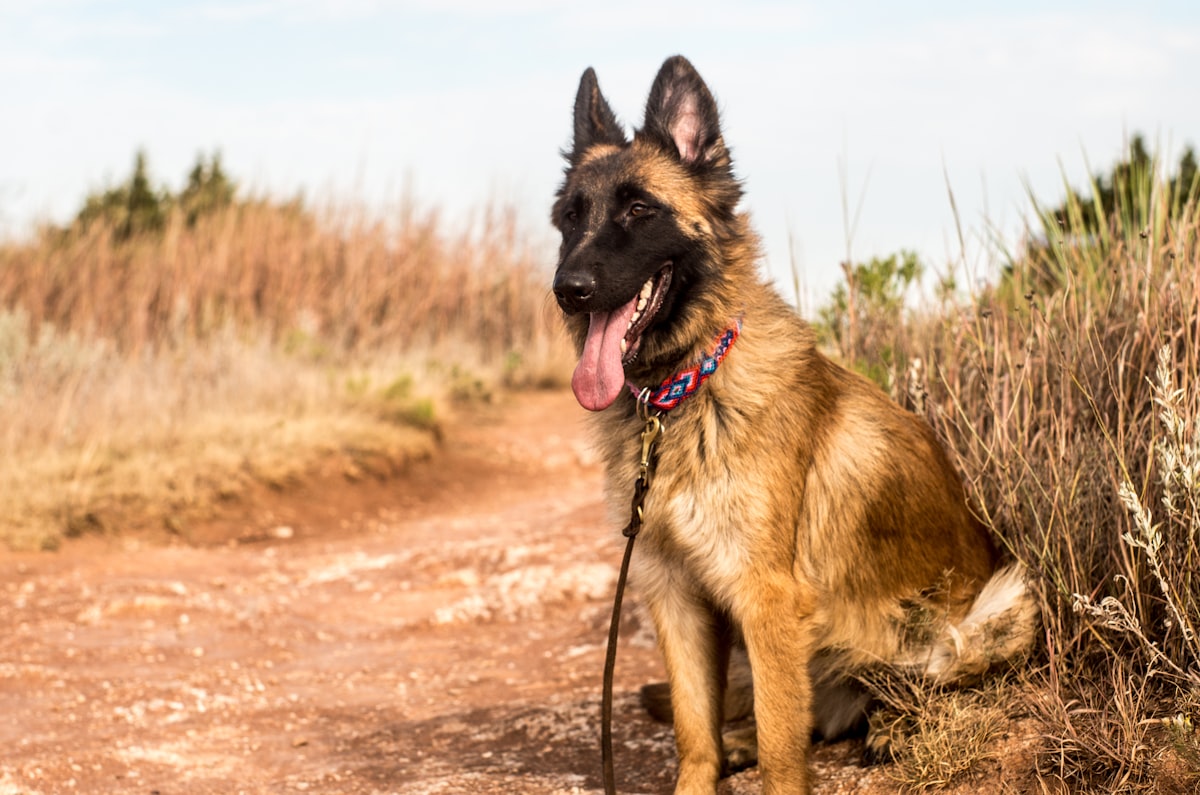
Key Takeaways
- 1Prey drive is instinct, not disobedience or bad behavior
- 2Management prevents problems that training alone cannot solve
- 3High-drive dogs can still enjoy trails safely with the right approach
- 4Equipment choices matter more with prey-driven dogs
- 5Trigger stacking makes reactions more likely and intense
Your dog spots a squirrel and transforms. The calm hiking partner vanishes, replaced by a creature locked onto prey with laser focus. Nothing you say registers. The leash strains. Training evaporates. Bodie goes into this state when he spots deer. His herding instincts combine with prey drive in a way that makes him nearly impossible to reach. The first time a deer bolted across our path, he nearly yanked me off my feet. This is prey drive, and it's one of the most challenging instincts to manage on trails.
Understanding Prey Drive
Prey drive isn't a training failure. It's hardwired behavior selected over thousands of generations.
When prey drive activates, you see intense focus locked onto movement. Body language shifts instantly, with stiffening muscles and laser fixation. Commands that normally work get ignored completely. The physical intensity often surprises owners who haven't seen this side of their dog. The full sequence runs from eye contact to stalking to chasing to grabbing and potentially killing.
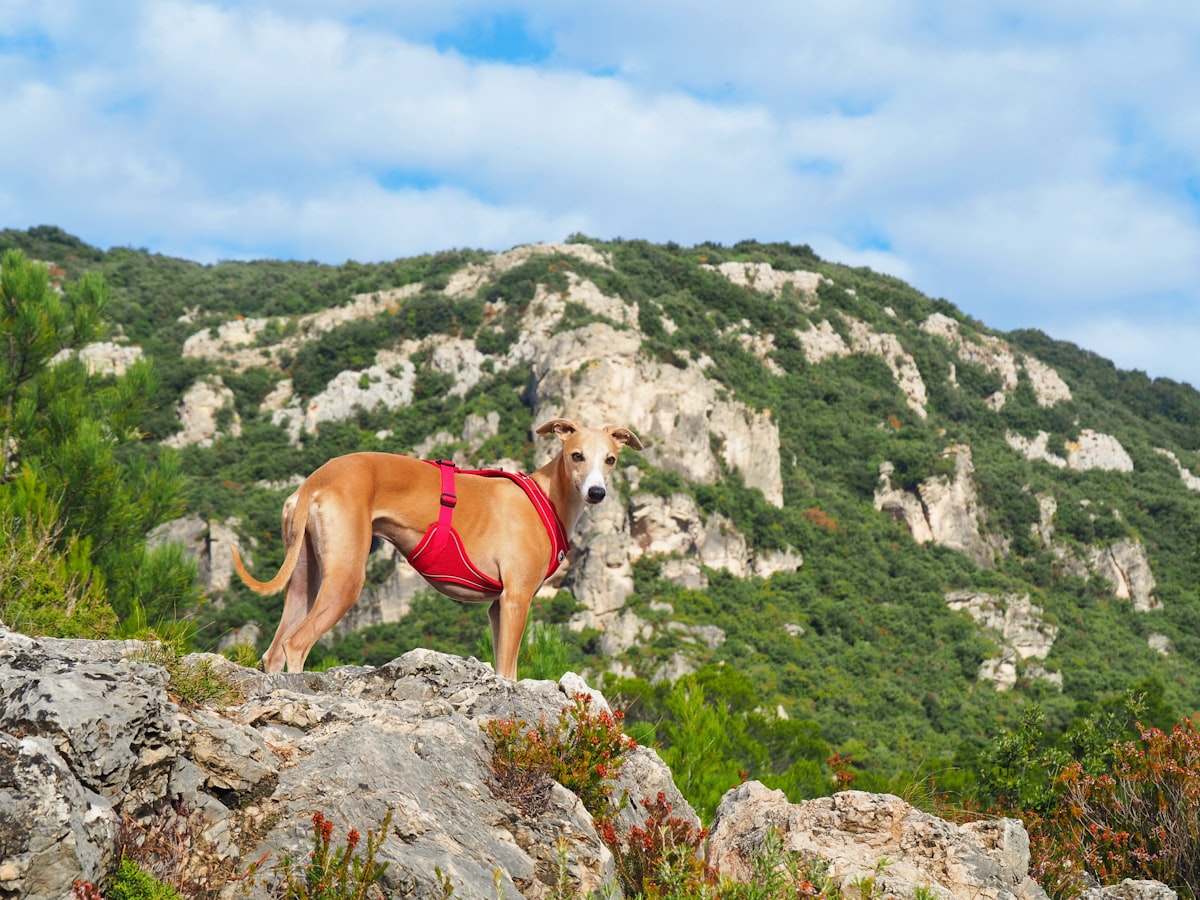
Certain breeds tend toward higher prey drive. Sighthounds like greyhounds, whippets, and salukis were bred to chase by sight. Terriers were developed for vermin control and often have strong kill instincts. Herding breeds respond intensely to movement even if they don't complete the prey sequence. Northern breeds like huskies and malamutes carry predatory heritage. Some sporting breeds also trigger strongly in the right circumstances.
Not every individual follows breed patterns. Some labs have intense prey drive; some terriers don't. Assess your specific dog, not just their breed.
Note
Prey drive exists on a spectrum. Some dogs notice wildlife and move on. Others enter a state where their thinking brain all but shuts off. Know where your dog falls on this spectrum.
Why Standard Training Often Fails
Most obedience training works through communication and motivation. Your dog hears the cue, considers the reward, and makes a choice. Prey drive bypasses all of that.
When prey drive activates, your dog's arousal level exceeds their training threshold. Instinct operates faster than learned responses. Way faster. The cue you've practiced a thousand times doesn't register because their brain has shifted into a mode where thinking takes a back seat to reacting. No treat competes with the chase itself. The satisfaction of pursuit is self-rewarding in a way that kibble simply cannot match. Your dog genuinely cannot hear or process commands in this state. Punishment doesn't reduce the instinct either. It just suppresses behavior temporarily while creating stress that may worsen overall reactivity.
Once you understand this, your expectations shift. You cannot train away prey drive. Period. But you can build alternative behaviors that interrupt the sequence before arousal peaks. Management will always be part of the picture for high-drive dogs. If you expect perfect control, you're setting everyone up for failure and frustration.
You won't eliminate prey drive. But you can manage situations so the drive doesn't create danger.
Equipment for High-Drive Dogs
Standard gear often fails when prey drive kicks in. Choose equipment that holds up to sudden intense force. I've seen a standard clip carabiner bend open when Bodie hit the end of the leash chasing a rabbit. Now I use only locking carabiners rated for climbing.
Skip retractable leashes entirely. They fail under load and teach pulling habits that make management harder. Double-check all hardware and connections before every hike. Biothane leashes hold up well and dry fast after creek crossings. Use backup attachment points by clipping to both collar and harness. One failure shouldn't mean freedom.
Escape-proof harness design is non-negotiable. Some dogs become escape artists the moment they lock onto prey. They back out of harnesses that seemed secure five minutes earlier. Look for front and back attachment points. The fit needs to be snug enough that it can't slip over the head when your dog backs up hard. A martingale-style backup collar adds insurance.
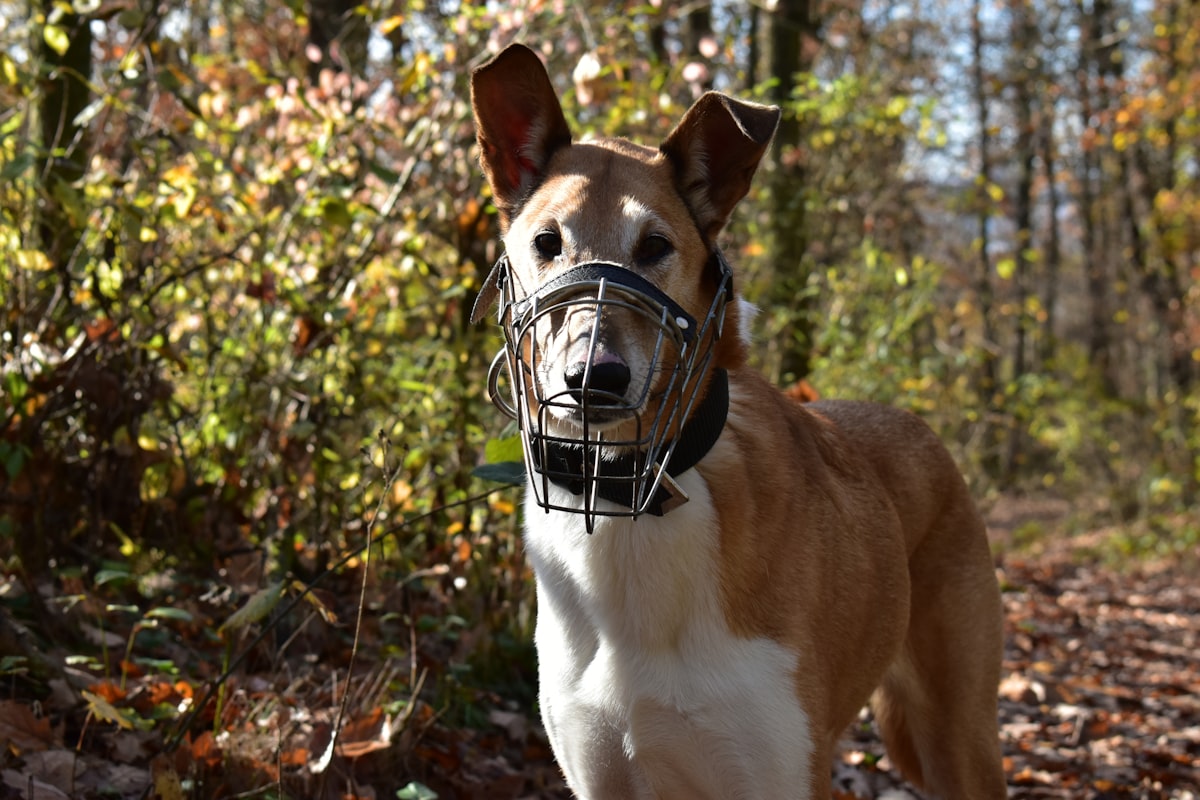
Long lines give controlled exercise in areas where full off-leash isn't appropriate. Muzzles protect wildlife and other animals for dogs with a grab/kill sequence. They're not cruel when you introduce them properly. GPS trackers help with worst-case scenarios. Even good management fails sometimes. High-visibility gear helps you spot your dog fast if they do slip away.
Warning
A prey-driven dog in full chase can generate enormous force. Equipment rated for casual walking may fail catastrophically. Test everything before you need it.
Trail Selection Strategies
Where you hike affects how often prey drive triggers. Bodie and I have learned to choose trails strategically rather than fighting constant battles.
| Trail Type | Trigger Risk | Best For |
|---|---|---|
| Wide trails with good visibility | Lower | High-drive dogs |
| Open areas where wildlife sees you coming | Lower | Practicing distance |
| Cooler times when small animals are less active | Lower | Summer hiking |
| Dense forest with lots of cover | Higher | Avoid if possible |
| Rocky areas with marmots and pikas | Higher | Only with very secure setup |
| Wetlands with waterfowl | Higher | Avoid entirely |
| Dawn and dusk when prey is most active | Higher | Schedule around |
You can't eliminate triggers, but you can choose environments that reduce their frequency and intensity.
Building Alternative Behaviors
While you can't train away instinct, you can build behaviors that interrupt the sequence before it reaches full intensity.
Start with a rock-solid "watch me" cue. Your dog learns to lock eyes with you on command, breaking the visual fixation that starts the prey sequence. An emergency u-turn teaches your dog to whip around and move away when you give the signal. Practice until it's automatic. A "find it" cue sends your dog's nose to the ground searching for treats. This physically disengages their eyes from prey. Stationary holds like down-stay or sit-stay become default positions when things get tense.
The training approach matters as much as the behaviors themselves. Build each behavior to fluency in a low-distraction environment first. Your living room, then your backyard, then a quiet park. Gradually add distance from distractions. Practice with moving distractions like toys and balls before introducing real wildlife. Then proof near actual wildlife at safe distances where you can maintain control. Regular practice matters. Skills decay without use.
Catch your dog before they hit the arousal threshold where training fails. That's the whole game.
Trigger Stacking Awareness
Prey drive reactions intensify when other stressors pile up.
Common stacking triggers include excitement from the car ride and frustration from earlier leash corrections. Being tired but overstimulated makes things worse. So does unresolved tension from a previous wildlife sighting. General background stress or anxiety adds to the pile. Any of these can lower your dog's threshold for reacting.
When triggers stack, everything gets worse. The threshold for reaction drops. Hard. The intensity of any reaction increases and recovery time extends. Multiple triggers can create sustained arousal that makes management nearly impossible.
Prevention starts with a calm before-hike routine. Address small triggers before they accumulate. Take breaks to let arousal levels drop back to baseline. End hikes before your dog is mentally fried.
In-The-Moment Management
Despite preparation, prey will appear. Have a response plan.
When you spot wildlife first, you have the advantage. Immediately get your dog's attention before they notice the animal. Create distance. Move away from the wildlife while using high-value treats to maintain focus on you rather than the environment. Keep moving until you're well past the trigger, then praise calm behavior heavily once you're clear.
When your dog spots wildlife first, stay calm. Don't panic or yell. That just adds arousal to an already escalating situation. Shorten the leash to prevent a lunge. Turn and move away from the trigger. Use treats to reward any attention your dog gives you, even briefly. Accept that this exposure happened. Move on without dwelling.
If your dog is already reacting, hold your ground without pulling back on the leash (pulling creates opposition reflex and intensifies their focus). Wait for any tiny break in their attention. Mark and reward that break instantly with a treat. Use that moment of engagement to create distance. Don't expect immediate calm; let arousal fade naturally as you move away.
The Reality Check
Some truths about hiking with high-prey-drive dogs are worth facing directly. Off-leash hiking may never be safe for your dog. This has nothing to do with being a bad dog or failing as a trainer. Their instincts run deep. The consequences of a chase can be severe. You will have failed management moments. Every handler does. A squirrel appears at the wrong moment, you glance at your phone, your dog sees prey before you do. These failures don't mean your system is broken. They mean you're working with powerful biology.
Some trails simply aren't appropriate for your dog. Trails with abundant ground squirrels, heavy deer traffic, or areas where wildlife is protected require honest assessment. When your dog reacts, they're doing exactly what generations of selective breeding designed them to do. That's biology, not misbehavior.
But there's another side to this reality. Your dog can absolutely enjoy trails safely with proper management. Every successful hike builds your observation skills and response timing. Management becomes second nature over time, and what once required constant vigilance becomes smooth routine. The partnership you build through this work runs deep. You learn to read your dog. Your dog learns to trust your guidance. High-prey-drive dogs require more from their handlers. In return, you develop skills and awareness that make you a better dog person overall.
Frequently Asked Questions
Sarah is a certified canine fitness trainer with a background in veterinary rehabilitation. She focuses on injury prevention, proper conditioning, and training techniques for trail dogs.